Draw Block Gladiator
- 4.6
- Rating
- 10.00M
- Installs
- Free
- Price
 Analysis by App-foxy
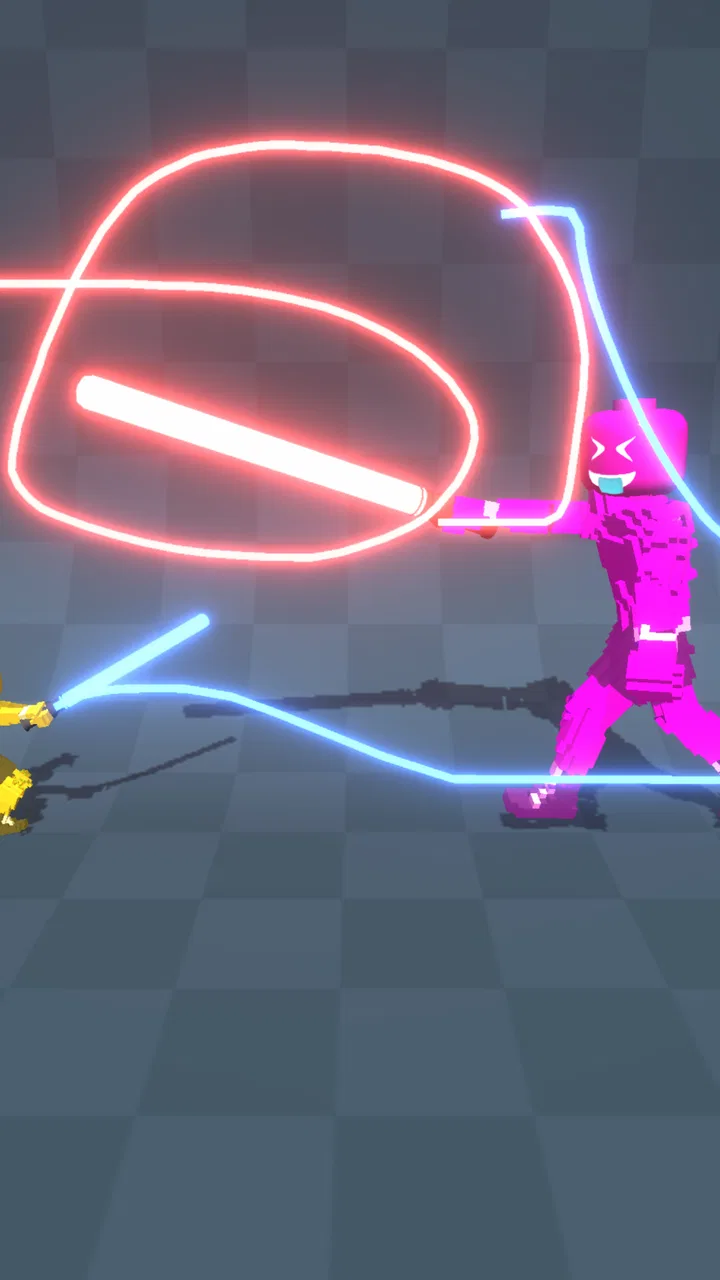
I found Draw Block Gladiator appealing for a very specific reason: it turns a simple drawing gesture into an action decision. Instead of asking me to learn a large control scheme, it asks me to look at the situation, sketch the right block or shape, and use that drawing to defeat the enemy. That makes the first few sessions easy to understand, but the idea has enough room for mistakes, experimentation, and quick retries.
This is a free action game from KAYAC Inc., aimed at players who enjoy short, visual challenges rather than long conversations, complicated menus, or heavy role-playing systems. Its store summary, “Defeat the enemy with a brilliant draw!”, describes the central appeal well without telling the whole story: the interesting part is not merely drawing, but deciding what to draw and when to draw it.
Why the first goals work so well
My early objective was immediately clear: understand the drawing logic and use it to overcome the opponent in front of me. That clarity matters on a mobile screen. I did not need to spend a long time studying statistics or memorizing abilities before feeling involved. The game puts the action idea first, which makes it easy to recommend for a quick break or for someone who wants a game that explains itself through interaction.
You May Also Like

 Blood Strike: 2.5 Anniversary
Blood Strike’s Loadouts Turn Every Drop Into a Tactical Gamble
A close look at Blood Strike’s custom loadouts: how fast access to signature weapons reshapes its battle royale rhythm, rewards preparation, and narrows the gap between fights.

 Pandora - Music & Podcasts
Pandora’s Music Is Easy to Start, but Harder to Recover
Pandora’s strength is its low-effort path from a seed to a station. Its weak spot is how much confidence it asks you to place in connection, setup, and quiet recovery.

 8 Ball Pool
 Is Built on Rivalries, Rematches, and Routine
A close look at the rivalries, rematches, shared routines, and unanswered safety questions that turn a quick pool match into a persistent mobile community.

 Samsung Music
’s Quiet Strength Is Playing What You Already Own
Its reach comes less from spectacle than from dependable access to a personal library. That simplicity is both the app’s strongest retention engine and its ceiling.

 AccuWeather: Weather Radar
AccuWeather Review: A Quick, Clear Forecast for Everyday Decisions
For everyday plans, the best forecast is the one you can understand quickly. AccuWeather makes rain timing, radar, and local conditions easy to act on, with a few trade-offs.

 Hill Climb Racing
Why Hill Climb Racing Still Turns Crashes Into One More Run
A tiny car, a bumpy hill and one more upgrade: Hill Climb Racing keeps resurfacing because its simple chaos makes every near-miss feel personal.
More From Our News Desk



The opening goals also create a useful learning loop. I draw, see whether the result works, notice what went wrong, and try to adjust the next attempt. That is more satisfying than simply tapping a large attack button because my input feels connected to the outcome. Even when the solution seems obvious, there is a small moment of anticipation between making the drawing and seeing whether it will do its job.
One practical tip is to avoid treating every drawing as a race. I initially wanted to sketch as quickly as possible, but a rushed shape can be less useful than a simple, deliberate one. Looking at the enemy first and then choosing a clean movement is a better habit. The game’s core is accessible, yet it rewards attention more than frantic gestures.
This makes the early experience suitable for several kinds of players. Someone new to mobile action games can understand the basic goal without learning a traditional virtual joystick. A player who normally prefers puzzle games may also appreciate the visual problem-solving. On the other hand, anyone expecting a deep combat system with many manually controlled attacks may find the opening intentionally lightweight.
Progress you can feel without a complicated interface
The strongest progress signal is personal improvement. I became faster at reading the situation and less wasteful with my drawings. That kind of progress is easy to overlook because it is not the same as building a large character sheet, but it is important here. The game’s identity comes from improving my response to its challenges rather than from turning the screen into a spreadsheet.
The enemy encounter itself provides feedback. A successful drawing gives me a direct sense that I understood the problem, while a failed attempt points toward a change in shape, timing, or approach. This creates a compact learning cycle that works particularly well when I only have a few minutes. I can stop after a successful attempt without feeling that I have abandoned a long quest.
There is also a useful distinction between discovering the basic rule and mastering it. The first stage is simply learning that drawing can produce the action needed to defeat an enemy. The second is becoming more economical and accurate. That difference gives the game more staying power than the short description suggests, although it will naturally appeal more to players who enjoy repeating a challenge to improve than to players who need constant new mechanics.
I would not choose this game if my main reason for playing is collecting detailed equipment or comparing complex character builds. Its progress language is visual and immediate. The reward is the feeling of solving the encounter cleanly, not the management of a large inventory. That focus is a strength when I want low friction, but it is also the boundary of the experience.
How the difficulty curve changes the way I play
The difficulty works best when I stop assuming that the first drawing that comes to mind is automatically the correct one. As the situations become less forgiving, the game encourages me to inspect the opponent and think about the geometry of my response. A broad, messy gesture may be tempting, but a more controlled shape can be easier to execute and more reliable.
This is where the action and puzzle sides meet. I am not only reacting to an enemy; I am translating a plan into a drawing. That translation creates a small risk of execution error, which gives otherwise simple encounters some tension. The challenge is not based solely on speed. It also depends on whether I can keep my drawing readable and purposeful under pressure.
For everyday play, I found it helpful to use a two-step rhythm. First, identify the immediate threat. Second, make the smallest drawing that addresses it. This approach reduces accidental overthinking and keeps the screen from becoming a test of artistic ability. You do not need to draw beautifully; you need to draw with intent.
That point is important for expectations. If you approach the game as a digital sketchbook, you may be disappointed. The drawing is a control method, not an invitation to create elaborate artwork. Its success comes from the relationship between gesture and action. Players who enjoy clean solutions will probably get more from it than players who want unrestricted creativity.
The curve also affects replay value. A player who only wants to see new content once may move through the basic idea quickly. Someone who enjoys refining technique can turn the same kind of encounter into a small personal challenge: can I solve it with less hesitation, a cleaner line, or fewer failed attempts? That second style of play is where the game earns its place beyond a single novelty session.
What keeps the loop interesting, and where it may lose pressure
The main retention pressure comes from the desire to get the next encounter right and from the satisfaction of improving at the drawing mechanic. It is a modest but honest form of motivation. I kept wanting to try again because a failed attempt felt understandable rather than random. I usually knew that my response had been too rushed, too imprecise, or simply poorly chosen.
That design can be more welcoming than a game that punishes a player with a long preparation phase. A quick retry lets me experiment without feeling that I have wasted a major investment. It also makes the game a good fit for waiting rooms, commutes, or short pauses between tasks. I can play it in small pieces and still understand what I am trying to improve.
At the same time, the focused loop may not sustain every player indefinitely. If you need a strong narrative, a large world, social competition, or a deep set of unlockable systems, this is probably not the right action game for you. Draw Block Gladiator is built around the pleasure of solving its central interaction. Once that interaction stops feeling fresh, the experience depends heavily on whether you enjoy polishing your own technique.
Another trade-off is that simplicity can make repetition more visible. In a conventional action game, new weapons, maps, abilities, and enemy behaviors can provide several different reasons to continue. Here, the drawing mechanic remains the star. That gives the game a clear personality, but it also means I would not expect it to replace a larger action title for long-form sessions.
Its Teen content rating is worth keeping in mind for families choosing games for younger players. I would personally check the store page and device settings before handing it to a child, especially because age suitability is a household decision rather than something a rating can settle by itself. For older players, the rating simply places it in a more mature bracket than a game designed specifically for very young children.
Who should download it and who should skip it
I would recommend this game to anyone who likes unusual touch controls, compact action puzzles, and the feeling of turning a simple input into a clever solution. It is especially suitable if you often play in short sessions and prefer games that become understandable within minutes. The free price also makes it easy to test without committing money first.
I would be more cautious about recommending it to players who want an expansive campaign or a traditional fighting game with direct movement, combos, and detailed control over every attack. This is not the best alternative to a full action adventure. It is closer to a focused challenge built around drawing, timing, and visual judgment.
Compared with ordinary action games, it removes much of the control complexity. That can feel refreshing when virtual buttons are awkward or when I do not want to remember several commands. Compared with ordinary puzzle games, it adds urgency because the enemy gives the drawing a practical purpose. The result sits between both categories, and that middle ground is precisely why it can feel distinctive.
A realistic use case is a short evening break after work. I may not have the energy for a story-heavy game, but I still want something interactive rather than passive. A few encounters let me focus on one clear problem at a time. If I make a mistake, I can assess it immediately instead of waiting through a long cutscene or rebuilding a character setup.
Device expectations and practical context
The game is available for Android, with a minimum operating system requirement of Android 7.0. Its current version is 111, so I would make sure the device is running a compatible system before trying to install it. The download decision is straightforward for Android users who want a free action title and are comfortable with a Teen-rated experience.
Its popularity also suggests that the concept has reached a broad mobile audience: the listing shows an average rating of 4.6 from around 23 thousand ratings and over 10 million installs. I treat those figures as useful context rather than a guarantee. A high average can tell me that the central idea works for many people, but it cannot predict whether I personally enjoy repeating drawing-based encounters.
The developer, KAYAC Inc., has chosen a very direct hook here. Instead of hiding the main mechanic behind a long introduction, the game makes the drawing action the reason to stay. That is good design for mobile discovery because I can understand the appeal quickly. It also means the game has less room to disguise weaknesses: if the drawing loop does not click, there is not much else competing for my attention.
One small but important recommendation is to play with enough screen visibility to judge the drawing comfortably. Bright distractions, a cramped grip, or trying to play while walking can make a precision-based gesture feel worse than it really is. The game is casual in length, but that does not mean every situation is ideal for accurate touch input.
My progression verdict
After spending time with it, I see Draw Block Gladiator as a focused action game whose progression is carried by learning, challenge, and the urge to make a better drawing. Its early goals are clear, its feedback is immediate, and its difficulty encourages more thoughtful gestures rather than a complicated control scheme. That combination gives it a satisfying rhythm for short sessions.
The limitation is equally clear: the game’s long-term appeal depends on how much I enjoy its one central idea. It does not replace a large action game, a story-driven adventure, or a deep progression-focused title. Instead, it offers a compact alternative for moments when I want to solve an enemy encounter with my own hand movement.
My honest recommendation is to try it if the idea of drawing a solution sounds more interesting than pressing a standard attack button. Start slowly, watch how the enemy changes the problem, and aim for clean gestures instead of artistic detail. If that small improvement loop feels rewarding, the game can become a surprisingly pleasant habit. If you need extensive unlocks, elaborate customization, or long narrative goals, I would choose another action game instead.
Overall, the free entry point, clear concept, and accessible touch interaction make it easy to sample. The best reason to keep it installed is not the promise of endless variety, but the simple satisfaction of seeing a quick idea become an effective action. For the right player, that is enough to make this drawing-based gladiator challenge worth returning to.
FAQs for Draw Block Gladiator
01What is Draw Block Gladiator about?
Draw Block Gladiator is a unique puzzle and strategy game where players create and control gladiators to battle against enemies. The core mechanic involves drawing shapes to form blocks that serve as both offensive and defensive tools in combat. Its engaging gameplay combines creativity and strategic planning, making it a refreshing addition to the gaming world.
02How does the drawing mechanic work in Draw Block Gladiator?
In Draw Block Gladiator, the drawing mechanic allows players to design their own block formations. These blocks can be used to attack opponents or defend against incoming attacks. The game’s intuitive interface makes it easy to draw shapes, and the physics engine ensures that each block interacts realistically during gameplay, adding depth and strategy.
03Is Draw Block Gladiator suitable for all ages?
Draw Block Gladiator is designed to be accessible to a wide audience, with content suitable for players of most ages. However, the game does involve combat scenarios, so parents may want to review the game first for younger children. Its emphasis on strategy and creativity makes it appealing to both younger players and adults.
04Are there in-app purchases in Draw Block Gladiator?
Yes, Draw Block Gladiator offers in-app purchases. These can enhance the gaming experience by providing additional resources, unique block designs, or special abilities. While the game is free to download and play, these optional purchases can help players progress more quickly or customize their gameplay experience further.
05What platforms is Draw Block Gladiator available on?
Draw Block Gladiator is available for both Android and iOS platforms. Users can download it from the Google Play Store or the Apple App Store. The game is optimized for a variety of devices, ensuring smooth performance and an enjoyable gaming experience across smartphones and tablets.
Pros
- Intuitive controls make gameplay fluid.
- Vibrant graphics enhance visual appeal.
- Varied levels keep players engaged.
- Challenging puzzles boost cognitive skills.
- Regular updates add new content.
Cons
- Ads can interrupt gameplay flow.
- Requires internet for some features.
- Limited customization options.
- Some levels feel repetitive.
- In-app purchases can be pricey.

Draw Block Gladiator
Gallery